Thursday, May 29, 2014

Foot Soldiers of Hindutva in Search of an Icon

- Subhash Gatade
“The epitah for the RSS volunteer will be that he was born, he joined the RSS and died without accomplishing anything.”-V. D. Savarkar
(D.V.Kelkar, “The R.S.S.” Economic Weekly ( 4 Feb 1950: 132) Page 36, The Brotherhood in Saffron,The RSS and The Hindu Revivalism, Andersen and Damle,Vistaar, 1986, Delhi)
Veer Savarkar was a Veer Purush who was not scared of death. He was a Shastra Upasak and Shaasrta Upasak: Shri Narendra Modi. May 29, 2013 Author: admin (www.narendramodi.in)

Celebrations at the central hall of Parliament are a marker of the political ambiance in the country.

The change of guard at the centre was very much visible at the place recently where the entire top brass of BJP including PM Narendra Modi were present to celebrate the birth anniversary of Savarkar. Modi described Savarkar as a prolific writer, poet and social reformer. “Tributes to Veer Savarkar on his birth anniversary. We remember and salute his tireless efforts towards the regeneration of our motherland.”

People would recall that normally it used to be a low-key event. Last year, the celebrations were further muted. Only few prominent leaders of the BJP were present there. The ascendance of BJP led government had clearly made the difference.

A trip down memory lane would tell us that even for the Sangh Parivar and its affiliated organisations this has not been the case always. The iconisation of Savarkar in the Parivar is not very old. Late nineties when Shiv Sena-BJP ran a coalition government in Maharashtra they did not even think of putting his portrait in the state the assembly. For them this discovery of Savarkar happened during the BJP led NDA regime at the centre (1998-2004).

Perhaps neither Modi nor any of his cabinet colleagues, most of whom started their social political life in the RSS or Rashtra Sevika Samity ( which is meant for women of the Hindutva brigade), would like to remember today that they are singing paens to the man who when alive had castigated the Hedgewars-Gurujis’ – founders and pioneers of RSS – and their Swaymsevaks umpteen times ( Sample the quote above) and the Hedgewars’-Golwalkars’ had also returned the compliment in the same vein.

Savarkar
Even a cursory glance at the trajectory of Hindu Mahasabha under the leadership of Savarkar or the way in which RSS unfolded itself during those days makes it quite clear that the differences in priorities between the two organisations was already visible from the day Savarkar was elected president of the Hindu Mahasabha after his release from jail ( 1937).In a sympathetic study of RSS “The Brotherhood in Saffron,The RSS and The Hindu Revivalism,” the authors Andersen and Damle clearly explain (Page 40, Vistaar, 1986, Delhi) that in fact Savarkar’s emphasis was on turning Mahasabha into a political party in opposition to the Congress when Hedgewars’ had already decided to insulate RSS from any active politics and concentrate on ‘cultural work’. Hedgewar and later Golwalkar also neither wanted to be associated with a formation whose confrontational activities would place the RSS in direct opposition to the Congress. According to him there were apprehensions regarding each other’s role in the Hindu Unification Movement. The souring of relations between the two organisations is visible in a angry letter issued by Savarkar’s office in 1940 advising that:
"... When there is such a serious conflict at a particular locality between any of the branches of the Sangh RSS and the Hindu Sabhaites that actual preaching is carried out against the Hindu Mahasabha …, then the Hindu Sabhaites should better leave the Sangh …and start their own Hindu Sabha volunteer corps.( Letter from V.D.Savarkar to S.L.Mishra, 3 March 1943, Savarkar files, Bombay)"
Definitely the fact that this ‘Veer Patriot’ (to quote title of a write-up which appeared in ‘Panchajanya’ sometime back discussing Savarkar) died a lonely man abhorred especially by the thriving ‘Parivar’ then, which made special efforts to maintain distance from him in those days, did not bother these ‘legatees’ then. It did not perturb their conscience a bit that it took more than thirty four long years after his death that they ultimately decided to claim their lineage from this pioneer of the Hindutva project.

Just to recapitulate, a decade back, when the Vajpayi led NDA was ousted out and UPA I led by Congress, had assumed reins of power a controversy had erupted about removal of Savarkar’s plaque from Port Blair’s cellular jail where Savarkar was jailed, Vikram Savarkar, Savarkar’s own nephew in an interview to a national daily exposed BJP’s lack of interest in him and castigated them for their sudden love for him. (Savarkar nephew hits out at BJP, August 30, 2004, Indian Express)

It may be noted that he had accused the senior leaders of the BJP for ‘keeping mum despite noticing the removal of his uncle’s quotations from Port Blair’s Cellular Jail’. According to him Ram Kapse, the then incumbent Lt. governor of Andaman and Nicobar and former M.P Ram Naik ( both BJP workers) “..did not utter a word when the plaque was removed.” The report further says that ,’ ..he is not surprised at BJP’s lack of interest in Savarkar. “We know very well that the BJP and RSS did not appreciate his (Savarkar’s) philosophy.”..’ ..The report further says that ‘ (Vikram- author) Savarkar insists BJP’s sudden love for the legend is an eyewash.’ “It is an effort to woo voters for the Assembly elections in Maharashtra.”

Tuesday, May 27, 2014

New Issue of Critique Magazine: Fascism Now and Here

New Issue of Critique "Fascism Now and Here" is out. Critique Magazine, August, 2014, Volume: 3 Issue: 1. Pg. 56. Rs. 30 /-. To order your copies write to delhi.nsi@gmail.com Sharing below the cover of this issue and the content list.


Contents

1. Editorial: Fascism: Now and Here

2. सम्पादकीय : हमारे समय का फासीवाद

Monday, May 26, 2014

हाशिये पर पड़े समझदारों के लिए कुछ सबक

यह लेख समकालीन तीसरी दुनिया के जून 2014 अंक में प्रकाशित होगा। अनुवादक: अभिषेक श्रीवास्तव। अंग्रेजी में इस लेख को पढ़ने के लिए यहाँ क्लिक करें

- रवि सिन्‍हा

हाशिया अभी-अभी कुछ ज्‍यादा चौड़ा हुआ है। अकसर केंद्र तक टहल मार आने वाले तमाम लोगों में से कई परिधि पर धकेल दिए गए हैं। मेरी चिंता उन्‍हें लेकर नहीं है। उनके बारे में तो तमाम विश्‍लेषण भरे पड़े हैं कि ऐसा क्‍यों और कैसे हो गया। मैं उनकी संख्‍या नहीं बढ़ाना चाहता। हाशिया हर ओर है। बाएं से, दाएं से, यह हाशिया मुख्‍यधारा की सियासी जमीन को घेरे हुए है। कुछ लोग शायद कहें कि दाहिनी तरफ कोई हाशिया नहीं है। उस ओर हर कुछ मुख्‍यधारा का ही हिस्‍सा है। चाहे जो हो, मेरे पास दाहिनी ओर के हाशिये पर कहने को बहुत कुछ नहीं है। 

मेरा सरोकार बाईं ओर के हाशियों से है जिसमें समूचा वाम घुसा पड़ा है, हालांकि यह स्‍वीकार कर पाना परंपरागत वाम के अधिकतर हिस्‍सों के लिए शायद बहुत जल्‍दबाज़ी होगी। वे किसी भी कीमत पर हम जैसों की नहीं सुनेंगे, जिन्‍होंने अपना समूचा जीवन ही हाशिये पर गुज़ारा है- कुछ तो इसमें अपनी बेवकूफि़यां और कमज़ोरियां जिम्‍मेदार रहीं और कुछ इसलिए भी कि हमने समय की मांग के आगे झुकने से इनकार कर दिया। यह वास्‍तव में हमारी गलती तो है नहीं कि हम ऐतिहासिक कालखंड की उस घाटी में पैदा हुए जहां भव्‍यतापूर्ण अतीत की ढलान पर उतरना तो पूरा हो चुका है जबकि भविष्‍य की चोटी पर चढ़ाई शुरू होना अब भी बाकी है। 

इस लेख के शीर्षक में ''समझदार'' वाला विशेषण मूल्‍यांकन के योग्‍य है इसलिए आदेशात्‍मक व दंभी होने का मुझ पर आरोप लग सकता है। या तो इस मूल्‍यांकन का कोई मानक हमें बताना होगा या फिर यह स्‍वीकार करना होगा कि यह प्रयोग आत्‍मपरक है। मैं दूसरे वाले विकल्‍प से शुरू करूंगा क्‍योंकि मैं जो कहना चाह रहा हूं उसमें गणना के किसी मानक पर अपना पांडित्‍य नहीं दिखाना चाहता। ज़ाहिर है, हमें किनारे बैठे उन उन्‍मादियों की ओर इशारा करने की भी कोई ज़रूरत नहीं होनी चाहिए जो बाकी सब पर संशोधनवाद, विश्‍वासघात और दुष्‍टता के पत्‍थर उछालकर खुद को जिंदा रखे हुए हैं। आपको पसंद हो या नहीं, लेकिन वे भी वाम का ही हिस्‍सा हैं। मैं यह नहीं कह सकता कि वे मेरी चिंता का विषय नहीं हैं, लेकिन दुनिया जैसी है उसे वैसा नहीं समझने को लेकर वे तकरीबन यांत्रिक हैं और आत्‍मचिंतन व आत्‍मावलोकन में वे पूरी तरह असमर्थ हैं। मैं उनसे यह उम्‍मीद नहीं करता कि वे किसी भी चीज़ से कोई भी सबक लेंगे सिवाय इसके कि वे अपने टुच्‍चे स्‍वार्थपरक उद्देश्‍यों को पूरा करें या एक-दूसरे को नुकसान पहुंचाने वाले झगड़ों को अंजाम दें। 

सोलह मई के बाद की स्थिति में हमें क्‍या अपेक्षा करनी चाहिए, मैं अपनी बात को यहां से शुरू करना चाहूंगा। तमाम बातें की जा रही हैं कि आने वाला वक्‍त बहुत बुरा रहने वाला है। बेशक वह बुरा ही होगा, लेकिन अनिवार्यत: अपेक्षित तरीकों से नहीं, हालांकि वह भी हो ही सकता है। इसमें कोई संदेह नहीं होना चाहिए कि भारत के लोगों ने अपने विवेक से एक ऐसे व्‍यक्ति और परिवार को भारी जनादेश दिया है जो क्रूरताएं करने में सक्षम है। अपनी सुविधानुसार ''जनादेश'' के अर्थ को बदल देना और अत्‍याचारियों की विजय के बाद कह देना कि दो-तिहाई भारतीयों ने उन्‍हें वोट ही नहीं दिया, इससे हमें कोई मदद नहीं मिलने वाली है। खुद को यह कह कर सांत्‍वना देने का कोई मतलब नहीं होगा कि वे चुनाव में जीते नहीं हैं बल्कि जो सत्‍ता में था उसकी हार हुई है। न ही हमें इस तथ्‍य से कोई राहत मिलने वाली है कि अश्‍वमेध का घोड़ा पूरब और दक्षिण के उन राज्‍यों में नाथ दिया गया जहां स्‍थानीय क्षत्रपों के पास कोई दैवीय ताकत थी। इस जीत का श्रेय धनबल और कॉरपोरेट नियंत्रित मीडिया को देते हुए हम कुछ गलत नहीं करते, लेकिन तब, हमें जनता के विवेक में अपने भरोसे के साथ इस बात का मिलान करना होगा क्‍योंकि हमारे कहने का एक अर्थ यह निकलता है कि जनता उनकी ताकत के असर में बह गई थी। 

इस बात को सहज रूप से मान लिया जाना चाहिए कि यह एक जबरदस्‍त जीत है। जैसा कि विजेता ने खुद अपने भाषण में कहा है, यह जीत साठ साल की मेहनत का नतीजा है जिसने चार पीढि़यों के ''श्रम'' और ''बलिदान'' को परखा है। आज के विेजेताओं ने पिछले साठ साल में जो लंबा मार्च किया है, उसने अपने पीछे दंगों और फसादों का एक लंबा सिलसिला भी छोड़ा है तथा सैकड़ों हज़ारों पुरुषों व स्त्रियों को मध्ययुगीन बर्बरता करने के लिए तैयार किया है। सवाल है- क्‍या वे इस निर्णायक विजय के बाद भी ऐसा ही करना जारी रखेंगे? 

इसका जवाब ना में ही होना चाहिए। एकाध छिटपुट दंगे यहां-वहां तो हमेशा ही होंगे। हमारा समाज जैसा है, उसमें इसे नकारा नहीं जा सकता लेकिन विजेताओं को वह काम जारी नहीं रखना होगा जो वे विजय से पहले करते आ रहे थे। गुजरात में 2002 के बाद दंगे न होना इसका एक उदाहरण है। वास्‍तव में, उन्‍हें गुजरात वाला प्रयोग बाकी देश में दुहराने की कोई ज़रूरत ही नहीं पड़ेगी, जहां- अगर उनकी एक उपलब्धि का उदाहरण इस तरह से गिनवाया जाए, कि- हिंदू और मुसलमान अब कभी भी पड़ोसी नहीं हो सकते। 

हमारा पहला सबक हालांकि इससे नहीं निकलना चाहिए कि वे सामाजिक ताने-बाने के साथ क्‍या और क्‍या नहीं कर सकते हैं। इसके बजाय सबक यहां से निकलना चाहिए कि वे राज्‍य और उसकी संरचनाओं के साथ क्‍या और क्‍या नहीं कर सकते हैं। यहां से जो सबक निकल रहा है, वह किसी आदतन वामपंथी के सहज बोध का निषेध करता है। विजेता की पाशविक ताकत का स्रोत बुनियादी तौर पर हमारे समाज में मौजूद है, लेकिन यह ताकत अपनी सामाजिक विचारधारा के अनुरूप राज्‍य की संरचनाओं को ढाल नहीं सकती। कुछ लोग कह सकते हैं कि आखिर वे ऐसा कोई काम करने का प्रयास करेंगे ही क्‍यों? आखिर को, यह एक पूंजीवादी राज्‍य है। इसका नियंत्रण अर्जित करने के बाद तो वे बड़ी आसानी से उन कॉरपोरेट ताकतों के हितों की पूर्ति कर सकेंगे जिनके बल पर वे सत्‍ता में आए हैं। यह बात जहां तक खींच कर ले जाई जाए, सही ही बैठेगी। यह बड़ी सहज बात है, लेकिन यहां एक निर्णायक बिंदु छूट रहा है। पूंजीवादी हितों को हिटलर जैसी फासीवादी तानाशाही भी पूरा कर सकती है और एक बुर्जुआ-जनतांत्रिक कल्‍याणकारी राज्‍य भी, जैसा कि हम स्‍वीडन या कनाडा में पाते हैं। तो क्‍या हम यह कह सकते हैं कि फिर इन दोनों के बीच के अंतर से किसी वामपंथी को कोई फ़र्क नहीं पड़ता, जो कि समाजवाद लाने का संघर्ष कर रहा है या फिर उन लोगों को जो समाजवाद का कथित तौर पर इंतज़ार कर रहे हैं? भारतीय राज्‍यतंत्र एक ऐसे समाज की गोद में बैठा है जो कभी-कभार फासीवादी तानाशाही की राह पर चलने वालों को भी सत्‍ता सौंप सकता है। खुशकिस्‍मती बस इतनी है कि अपनी विचारधारा और चाहतों के मुताबिक वे ऐसा कर नहीं पाएंगे। वे ऐसा करने की कोशिश भी शायद नहीं करेंगे क्‍योंकि दीवार पर लिखी इबारत वे बखूबी पढ़ सकते हैं। एक वामपंथी ऐसे में भारतीय हिटलर के उभार को रोकने का श्रेय यहां की जनता को ही देगा। वह पूरी तरह गलत भी नहीं होगा। आखिरकार दुनिया में जो कुछ होता है, वह अंतत: अपने विश्‍लेषण में जनता का ही किया हुआ होता है। लेकिन ऐसा दीर्घकालिक और व्‍यापक विश्‍लेषण अकसर पुनरुक्ति का शिकार होता है जो हमारी समझदारी में कोई योगदान नहीं दे पाता।

Statement on the General Elections, 2014

- P.A.D.S (People's Alliance for Democracy and Secularism)

The Loksabha election results of 2014 surprised everyone. They are beyond the wildest dreams of even the most ardent BJP and Modi supporters, and worse than the worst scenarios imagined by BJP’s political opponents. Even though these elections results are singularly stunning, phenomena like these have diverse reasons. A comprehensive understanding and meaningful response require that all these reasons be dispassionately explored and evaluated.

First, the votes behind these results. BJP polled 31% of votes. Never before has a party with so few votes won a mjority in national elections. Clearly, the first past the post system has benefited it disproportionately, more than any other ruling party in the past. This electoral system has amplified the BJP victory and made it look so impressive. However, BJP’s electoral achievements in other domains must not be discounted. For the first time it managed to dislodge the Congress as the main party to represent Assam in the Lok Sabha. Fighting alone, it garnered 17% of votes in West Bengal and made determined bids in Tamil Nadu and Kerala. In all states where it fought a straight battle with the Congress, its vote share was above or close to fifty percent. It ran the most expensive and well organised campaign. Among all contestants, only it appeared determined to win and left no stone unturned to achieve its objective. It played the communal card astutely in UP and Bihar, with full paraphernalia of communal riots, started more than a year ago, and unabashed use of Hindu religious symbols. At other places it was the ‘development’. 

The BJP victory is actually Mr Modi’s victory. For the first time since Mrs Indira Gandhi after the 1971 and 1980 elections, a single person has come to acquire such a mandate at the national level. These results show a significant shift of electoral politics to the right and marginalisation of non-communal forces. All parties which have done well, the Shiv Sena, AIADMK, TDP or even the TMC, are either openly communal or have had truck with the BJP in the past.

Democratic and secular forces need to look beyond election results. Elections in liberal democracies are a means to form governments that enjoy formal legitimacy. They are a window to popular politics , yet the gross nature of this window fails to show the actual changes in society. The first past the post system was favoured in India because it is the easiest method toform stable majorities for legislative purposes and government formation. Though state power is the most organised and the key coercive power in all societies, and as long as there is no popular challenge, it also is the one enjoying maximum legitimacy, democratic forces should not confuse electoral politics or the state power constituted through elections as the be all, and the end all of popular politics. This is particularly so in India, where almost all elected governments indulge in corruption and unconstitutional use of state power. 

Once the authoritarian and communal right wing is firmly in the saddle, it is essential for democratic and secular forces to challenge their moral, and constitutional legitimacy at all public fora. Just because the largest number of people who voted have opted for the BJP and Mr Modi, does not mean we stop fighting against their anti-democratic and communal policies and actions. This principle of our democratic politics would hold true even if not just 31%, but the overwhelming majority of voters were to vote for the BJP and Mr Modi.

It was well known before elections that the big capitalists and corporate media were rooting for Mr Modi. Professional and bureaucratic elites, and urban and rural propertied, including urban middle classes, have overwhelmingly voted for the BJP. In fact in all recent elections, higher an Indian is in the class and/or caste hierarchy, more likely he or she is to vote for the right wing. The two and a half decades of neo-liberal economic policies have increased their prosperity much faster than the majority. They resented the social welfare and affirmative action policies of the UPA, related to rural employment, land acquisition, Panchayati Raj and access to food, even if these measures were half-hearted and badly implemented. They were specifically angry with the UPA’s so called policy paralysis and lack of governance. They wanted some one like Mr Modi who they think would boldly tweak and break rules and regulations in their favour. The propertied sections of our society have enjoyed decisive influence over state policy. However, it is for the first time that these sections have successfully managed to project their concerns as the dominant concerns of electoral politics, and marginalised the hitherto popular concerns related to welfare and social justice. 

Anti-democratic tendencies in popular culture 

This change has been tremendously helped by anti-democratic tendencies in the popular culture unleashed by the neo-liberal economic order. In a society with a thick presence of feudal past in family and community life, which has not yet fully grasped the significance of human equality and citizens’ rights, the mantra of market success at any cost has encouraged valorisation of personal gain, power, aggression, and rule breaking. This is the moral economy of neo-liberalism in which somebody like Mr Modi emerges as a natural leader. In this framework the right to life of the members of a religious minority, and the second-class citizenship forced on them, count for less than ‘development’. Analysts are calling the desire for a Gujarat style development as ‘aspirational’, without noticing its anti-democratic core. The neo-liberal moral world has a spread much wider than the direct beneficiaries of the new economy. It influences all those who can not visualise an alternative, and think they can be successful in the current order. 

The neo-liberal moral order in India has also fostered symbolic orthodoxy, a new type of religiosity, and non rational cultural preferences. The respectable and morally good behaviour in this world is increasingly ritualistic, based mainly on existing religious symbols. It gels well with the earlier upper caste discomfort with the limited secularism of the public sphere after independence. Since critical reflection is little valued in both the old and the new type of religiosity, they fails to connect with the liberal and left ideas in the domain of politics, culture and higher education. They resent the presence of anglicised liberal and left intellectuals in these domains, and disparage alternate life styles. On the other hand, a party like the BJP which freely uses religion in its politics swims like a fish in water in this moral world.

Arrogance and incompetence of UPA; opportunism by so-called non-communal parties

The price rise, corruption, and the arrogance and incompetence of the UPA leadership pushed many sections of the popular classes to profound dis-satisfaction. They had made up their mind to throw out the existing regime. Wherever a credible non-Congress, non-BJP alternative was available, as for instance in the working people neighbourhoods of Delhi, they voted for it. At other places the BJP benefited from their rejection of the UPA. By and large, the non-BJP parties failed to provide a coherent platform to popular classes. Their call to social justice rang hollow when they are run like family (SP, DMK) or personal fiefdoms (BSP), they have rarely led popular struggles of sections they claim to represent and have been taking voters for granted. 

The so-called non-communal parties reduced secularism to an ugly scramble for minority votes. Even though the Congress pioneered the rights based approach to social welfare in legislature, inconsistency and bad implementation meant that people saw these as last ditch efforts, adding to the perception of its mis-governance. Also, the party itself appeared wary of claiming credit even for legitimate cases like the adivasis of Niyamgiri stopping a multi-national mining giant, for the fear that it will further alienate the already angry propertied sections of the society. The success of the BJP and Mr Modi, is also a sign of the failure of traditional electoral politics.

Saturday, May 24, 2014

“भगवा उभार” से सबक : जो समझा वही सिकंदर

जावेद अनीस 

स्टार्टर

2014 का चुनाव कई मामलों में गेम-चेंजर रहा है, यह एक विचारधारा की जीत है। पहली बार कम से कम अगले 5 सालों तक देश की बागडोर पूरी तरह से एक संघ प्रचारक के हाथों में रहने वाली है। नरेंद्र मोदी को भाजपा संसदीय दल का नेता चुने जाने के बाद सासंदों को संबोधित करते हुए भाजपा अध्यक्ष राजनाथ सिंह ने कहा कि “इस चुनाव में भाजपा को मिली जीत ऐतिहासिक है... और इस जीत के बाद हम देश में आर्थिक, सामाजिक और सांस्कृतिक परिवर्तन लाने में सक्षम होंगें।” निःसंदेह इस बार के चुनाव परिणाम अपने साथ ऐसे बदलाव लेकर आया है जो भारत में नये युग के वाहक होंगें। स्वामी रामदेव के शब्दों में कहें तो यह “व्यवस्था परिवर्तन” है। इस बात को लेकर जहाँ एक तरफ देश की एक बड़े तबके में भविष्य को लेकर बहुत उत्साह नज़र आ रहा है, वहीँ दूसरी ओर ऐसे लोगों/तबकों की तादाद भी कम नहीं है जो आशंकित है और जिनका मानना है कि यह राजनीतिक बदलाव आम नहीं बल्कि एक विचारधारा की जीत है जिसका सीधा टकराव भारत की बहुलतावादी स्वरूप से है । यह चिंता भी जताई जा रही है कि इस देश में चीजें अब पहले जैसी नहीं रहेंगी और बहुत कुछ विपरीत दिशा में बदलेगा। 

जो लोग ऐसा नहीं मानते हैं उनके लिए एक कहानी है, जिसे पुरानी पीढ़ी की दादी,नानियाँ अपने पोते-पोतियों को सुनाया करती थीं, कहानी में एक अत्याचारी विलेन होता है जो ज्यादातर राक्षस या बुरा राजा होता है, इस विलेन के जुल्म और सितम से आम जनता बहुत त्रस्त होती है, जनता को मुक्ति दिलाने के लिए हीरो की इंट्री होती है , जो की कोई सुन्दर और बहादुर राजकुमार होता है, हीरो अत्याचारी विलेन को पराजित करके उसके प्राण लेने की कोशिश करता है लेकिन हैरतअंगेज रूप से वह मरता नहीं है , तब कोई नजूमी या साधू हीरो को बताता हैं कि दरअसल विलेन के प्राण किसी ख़ास परिंदे में कैद हैं । मोदी और संघ के मामले में भी यही बात लागु होती है , मोदी के प्राण भी संघ में कैद हैं ।

भविष्य में कितने अच्छे या बुरे दिन आने वाले हैं इसको लेकर काफी बातें हो रही हैं। लेकिन इसके साथ इस बात को भी समझने की जरूरत है कि आखिर एक ऐसी विचारधारा का प्रतिनिधित्व करने वाली शक्तिओं को इस देश की राजसत्ता तक पहुचने का मौका कैसे मिल गया जिन पर दक्षिणपंथी और पुरातनपंथी होने का लेबल लगा है ? आखिर इस बार ऐसा क्या हो गया कि मुल्क की उभरती युवा पीढ़ी और मध्यवर्ग को संघ का एक 64 वर्षीय अधेड़ प्रचारक सपने बेचने में कामयाब हो गया? जबकि उसके बरक्श “कट्टर सोच नहीं युवा जोश” की बात करने वाला एक युवा नेता पूरी तरह से नाकाम साबित हुआ है। 

पिछले कुछ दशकों से विश्लेषक भारतीय राजनीति का जाति,धर्म और क्षेत्र के आधार पर आधारित आकलन करते आये है। मोदी की मौजूदा जीत विश्लेषण के इस फ्रेमवर्क से बाहर जान पड़ता है, चुनाव नतीजे के दिन राजनीति विज्ञानी हिलाल अहमद ने किसी चैनल पर चर्चा के दौरान टिप्पणी करते हुए कहा था कि इस चुनाव में विजेता पार्टी और उसके साथी संगठनों द्वारा जो प्रक्रिया चलायी गयी है और जिस तरह के नतीजे आये हैं वे अभूतपूर्व हैं उनको समझने के लिए हमारे पास अभी “टूल” ही नही है। इसी बात को आगे बढ़ाते हुए कहा जा सकता कि वाहक मानी जाने वाली वामपंथी ताकतें भी समय की नब्ज को पहचानने और बदलाव की आकांक्षा को संबोंधित करने में नाकाम साबित हुई है। यहीं नहीं इतना सब हो जाने के बाद भी वे अभी भी "जोड़" के फार्मूले से "घटाव" का सवाल हल निकलने में मशगूल नज़र आ रही हैं। जाहिर सी बात है कि ऐसा करने से जवाब का गलत आना तय है ! शायद वामपंथ द्वारा बार-बार दुहराए जाने वाले एतिहासिक गलतियों की वजह भी यही है, लेकिन हैरत तो इस बात की होती है कि एक प्रतिगामी विचारधारा समय के हिसाब से अपनी मूल विचारधारा से समझौता किये बगैर अपने राजनीति में बदलाव करती है और अपने लिए नयी रणनीतियां बनाने में कामयाब होती है। समाज और राजनीति विज्ञान के आलिम इसका गहराई से विश्लेषण कर रहे होगें। समाज का एक तालिबइल्म होने के नाते मुझे फौरी तौर पर कुछ मोटी बातें समझ में आ रही है जिन्हें साँझा कर रहा हूँ। 

जो समझा वही सिकंदर 

चुनाव प्रचार के दौरान कांग्रेस पार्टी ने अपनी उपलब्धियों को लेकर “भारत निर्माण” सीरीज के विज्ञापन जारी किये थे जिसमें तत्कालीन सरकार द्वारा 10 साल पहले के भारत को मौजूदा समय से तुलना करके समझाने की कोशिश की गयी थी, कि देश में विकास और बदलाव हुआ है और चीजें पहले से बेहतर हुई हैं। निश्चित रूप से तथ्य इस बात के गवाह हैं कि यूपीए के पिछले दस सालों के कार्यकाल में काफी कुछ बदला है। इस दौरान भारत दुनिया की तीसरी सबसे बड़ी अर्थ-व्यवस्था बना है, यही दस साल सबसे तेज विकास दर के साल रहे हैं। 
लेकिन इन्हीं दस सालों में और भी बहुत कुछ बदला है, इस दौरान मध्य वर्ग का दायरा बढ़ा है, बड़ी संख्या में एक नयी पीढ़ी सामने आई है जिसने पहली बार वोट दिया है। इन्हीं दस सालों में ही सूचना स्रोतों की बाढ़ सी आ गयी है। अभूतपूर्व रूप से जनता के पास दुनिया भर की सूचना आदान–प्रदान करने वाली विभिन्न तकनीकों की रीच बढ़ी है, टी.वी. चैनलों सोशल–मीडिया, इन्टरनेट, मोबाइल, व्हाट्स -अप जैसे जनमाध्यमों की पैठ कस्बों को पार करते हुए गाँवों तक हुई है, जिसके नतीजे में जनता का मानस और अपने आसपास की चीजों को देखने का नजरिया भी बदला है। जनता अब पहले से ज्यादा “कम्यूनिकेटिव” हो गयी है। अब वह अपने नेता से “साइलन्स” नहीं “कम्युनिकेशन” की उम्मीद करने लगी है, भले ही इस “कम्युनिकेशन” में उसकी भूमिका “रिसीवर” तक ही सीमित रहे। विडंबना है कि इन सब बदलावों की वाहक रही कांग्रेस पार्टी ही इसे समझने में चूक कर बैठी।

वहीँ मनमोहन सरकार का काल (विशेषकर उनका दूसरा कार्यकाल) गैर-जवाबदेही, निराशा, दंभ और निक्कमेपन का दौर साबित हुआ है। इस दौरान भ्रष्टाचार के पिछले सारे रिकॉर्ड तोड़ डाले गये, मंहगाई हर रोज नए मुकाम तय कर रही थी, ऊपर से तत्कालीन हुक्मरान इस पर मरहम लगाने के बजाये अजीबोगरीब बयान दे कर जले पर नमक छिड़क रहे थे, जनता के बीच नेतृत्व को लेकर चिढ़ और भ्रम बना हुआ था। इसका परिणाम यह हुआ की जनता इस सरकार को बोझ मानने लगी और किसी ऐसी विकल्प के तलाश में थी जो उन्हें इस सरकार से मुक्ति दिखा सके। जनता में गुस्सा किस कदर था इसका अंदाजा इस बात से लगाया जा सकता है कि आखिर के तीन वर्षों में मनमोहन सरकार के खिलाफ देश भर में अभूतपूर्व जन-आन्दोलन हुए जिसमें बड़ी संख्या में लोग भ्रष्ट्राचार, महंगाई और सुरक्षा को लेकर सड़कों पर उतर आये। लेकिन इसको लेकर भी मनमोहन सरकार और कांग्रेस पार्टी के नेतृत्व का रवैया, ठंढा और दंभी ही रहा।

Wednesday, May 21, 2014

Lesson for the Saner Segments of the Margins

- Ravi Sinha

The margins just got bigger. Many among those who customarily inhabit the centre have been pushed to the periphery. They are not my concern. There are analyses galore about why and how this has happened. I am not going to add one more to those. Margins exist on all sides. They encircle the political mainland from left and from right. Some might say there are no margins on the right. Everything on that side is mainstream. In any case, I will have little to say about the margins on the right.

My concern is with the left-side margins that now harbour the entire Left, although it is perhaps too soon for much of the traditional Left to acknowledge that. They are not likely, in any case, to listen to those of us who have spent a lifetime on the margins – partly because of our own follies and frailties but also because we have refused to succumb to the unsavory demands of the times. It is, after all, not our fault that we are born in a valley of historical time where the descent on the slopes of past glories has already come to an end and the ascent to the future ones is yet to begin.

The adjective “saner” in the title is an evaluative term and one could be accused of being judgmental and arrogant. Either one should spell out the criteria underlying such evaluations or admit that the judgment is a subjective one. I will begin with the second option for the simple reason that I do not wish to be pedantic about counting criteria that can be discerned, in any case, from what I have to say. Of course, one does not even need to point towards the lunatic fringe that lives by hurling accusations of revisionism, treachery and worse at everyone else. Whether one likes it or not, they too are part of the Left. I cannot say that they are not my concern. But they are almost hard-wired for not understanding the world as it is and thoroughly incapable of reflection and self-reflection. I do not expect them to draw any lessons from anything except for petty and selfish ends or for picking up an internecine fight.

Let me begin with what to expect in the aftermath of May 16. There is much talk about how bad it is going to be. Of course it is going to be bad, but not necessarily in the expected ways, although that too might happen. There should not be any doubt that the people of India, in their wisdom, have given a massive mandate to a person and a parivar capable of the diabolic. It is not helpful to conveniently change the meaning of the term “mandate” and say after the victory of the brutes that two thirds of Indians did not vote for them. There is no point consoling ourselves that they did not win the elections; the incumbents lost it. Nor should we draw much comfort from the fact that the horse of Ashwamedh was stopped in the far out kingdoms in the east and the south where local deities had their own divine powers. We are not entirely wrong when we attribute the victory to money-power and the corporate-controlled media. But, then, we also have the task of reconciling this with our faith in the wisdom of the people who can be thus navigated.

It is to be plainly accepted that it is a resounding victory. It has been, as the man himself acknowledged in his victory speech, in the making for sixty years and it has taken the “labour” and the “sacrifices” of four generations. The six decade long march of today’s victors has left a trail of riots and carnages and steeled hundreds of thousands of men and women to have the capacity and the stomach for medieval barbarity. The question is – will they continue to do the same after this decisive victory?

The answer has to be in the negative. There could always be a riot here or a riot there. It cannot be ruled out in a society like ours. But the victors do not have to continue with what they were doing before the victory. Non-occurrence of riots in Gujarat after 2002 is a telling story. In fact they do not even need to repeat in rest of the country their experiments with Gujarat, where – to take just one accomplishment of theirs as an illustrative example – Hindus and Muslims can no longer live in the same neighborhoods.

Sunday, May 18, 2014

Is Past a Foreign Country?: Thinking About Adam Ajmeris in Saffron Times

- Subhash Gatade

"The past is a foreign country; they do things differently there.” - L.P. Hartley, The Go-Between

Sixteen year old Shahwan, from Ahmedabad, who is still waiting for his Class X results, was extremely happy that day, when India’s electorate gave its verdict. He hugged his Ammi and went out in his Mohalla along-with his brother Almas, yelling ‘we have won’, ‘we have won’. And not only Shahwan and his family members but one could witness similar joy in the houses of Mohammad Salim Hanif Sheikh, Abdul Qayyum Mansuri alias Mufti Baba and several others.

Interestingly Shahwan’s tremendous joy with tears flowing down the eyes of his Ammi Naseem (40) had nothing to do with the fact that Mr Narendra Damodardas Modi, had delivered a ‘historic victory’ to the BJP.

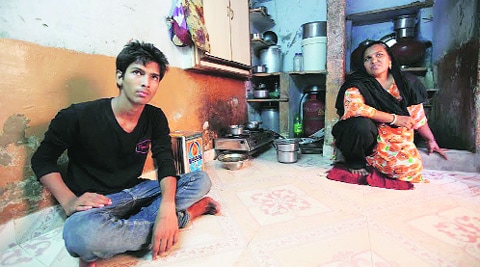
Shahwan and his mother. File photo: Indian Express
It was a strange coincidence that the day India’s electorate decided to give a mandate to the Modi led BJP to rule the country for coming five years also happened to be the day when Supreme Court of India in a historic judgment overturned a controversial decision take by him as home minister. It was related to the prosecution of those arrested for Akshardham attack under now lapsed Prevention of Terrorism Act (POTA).

Perhaps not very many people would remember today how Akshardham Mandir in Ahmedabad was attacked by two terrorists killing 37 people and injuring several others way back in September 2002. It was reported that both the terrorists were killed by commandos on the spot itself. Shahwan’s father Adam Sulaiman Mansuri alias Adam Ajmeri, a poor mechanic along-with four others were arrested from Shahpur and Dariapur areas of Ahmedabad in August 2003 by the anti-terrorism squad of the Ahmedabad police for their alleged role in the attack. The sixth accused was nabbed from Uttar Pradesh a few days later. The lower courts sentenced Adam and another person to death for his ‘heinous role in the conspiracy’ which was later confirmed by the Gujarat high court. Remaining four accused were sentenced to rigorous imprisonment for life.

Pulling up Gujarat police for framing “innocent” people in the particular case a bench comprising of Justices A K Patnaik and V Gopala Gowda held that the prosecution failed to establish their guilt beyond reasonable doubt and they deserved exoneration from all the charges. The bench nixed their confessional statements being invalid in law and also said that the prosecution could not establish they participated in any conspiracy. After perusing evidence and lower court judgments, the SC bench underlined how the story of prosecution crumbles at every juncture. According to Indian Express ( 17 th May 2014) the bench blamed the home minister for:
“clear non-application of mind ..in granting sanction,” since it was based neither on an informed decision nor on an independent analysis of facts..The court said the sanction was hence “void” and not a legal and valid sanction under POTA.

Thursday, May 15, 2014

Isn’t ‘illegal Bangladeshi’ Racist Shorthand for All Bengali Speaking Muslims in Assam?

- Bonojit Hussain

Note: A shorter version of this article was published in today's Calcutta edition of The Telegraph.

The fragile and unstable peace in Bodoland Territorial Autonomous Districts (BTAD) of Assam has once again been ruptured. The recent massacre of Muslims of East Bengali descent in Kokrajhar and Baksa districts of BTAD on 1st and 2nd May has already taken toll on 46 lives; with many people still missing, the dead count might go up.

This is not the first time that targeted ethnic violence has occurred in what is today BTAD. Through out the 1990’s armed Bodo groups have indulged in pogroms against Nepalis, Adivasis and Muslims and Hindus of East Bengali descent. But since the creation of BTAD in 2003, increasingly only Muslims of East Bengali descent are being targeted. Worst among all was the so-called ‘riots’ of 2012 where 108 people died. According to sources in Assam government, 79 were Muslims of East Bengali descent, 22 were Bodos and 4 were from other communities.

A lot has been written about the underlying causes of these recurring targeted killings and we need not dwell upon that here. (for an overview see Sanjib Barua, “Assam: The Politics of Electoral Violence”, Outlook Magazine, May 09, 2014). What should bother us all is how quickly discourse over the recurring massacres in BTAD is transformed into a debate on the question of illegal immigration from Bangladesh, wherein the victims are immediately labeled as ‘illegal Bangladeshis’. Even if the victims were ‘illegal Bangladeshis’, the barbaric act of killing 46 people in a span of 36 hours is a crime against humanity.

Poster in Kokrajhar district during 2012 riots. Photo: Bonojit Hussain
Like in 2012, immediately large section of Assamese society, a section of the national media and the BJP leadership raised the bogey of ‘illegal Bangladeshi’ to justify the killings and divert attention from the real causes of the massacre. Some even went to the extent of likening victims of the massacre with locust. Verbal attacks and abuses are also being launched on social media against anyone who dares question the hypocrisies of Assamese society. Recently an Assamese research scholar at Jawaharlal Nehru University was subjected to threats and abuses by Assamese xenophobes, she was also asked to re-locate to Bangladesh owing to her sympathies for these ‘locusts’.

If one poses the question as to how these xenophobes know that Assam is being swarmed by ‘illegal Bangladeshis’, the answer is always about increasing visibility and numbers of Miyas (slur used to denote Muslim Bangladeshis) in urban clusters, new settlements in peripheries of forest land and settlements near river embankments. I argue this is a racist way of telling.

It is a difficult question to answer how many undocumented Bangladeshis are there in BTAD area let alone in all of Assam. However, it is impossible to refute that from 1901 to 1941, encouraged by the colonial administration, over 10 lakhs migrated and settled in Assam from East Bengal. The geographical area of present day BTAD would fall under what were Goalpara and Kamrup districts during the colonial era. So, it is worth mentioning that East Bengali Muslim peasants first settled in undivided Goalpara district, before they spanned out to other parts of western and central Assam. The decadal growth of population in Goalpara district had shot up by 30 % as early as 1901-1911 compared to 1.4 % and 2 % in the preceding decades respectively. In 1921-1931, the decadal growth of population of Goalpara dropped to 15.8 % because most of the suitable wasteland in the district had already been occupied by immigrants who poured into the district in 1901-1921, and that the immigrants had found a larger scope for settling in Kamrup and Nagaon districts. During 1921 to 1931 Barpeta subdivision of Kamrup district saw an enormous 69 % increase in population. Between 1901 and 1931, 4.98 lakhs East Bengali Muslim peasants are recorded in Goalpara district alone. Here, then, the question arises – Where are the descendants of the lakhs of Muslim peasants of East Bengali descent who settled in the region before partition? (for a detailed discussion see, Banajit Hussain, “The Bodoland Violence and Politics of Explanation”; Seminar Magazine, No: 640, December, 2012)

Monday, May 12, 2014

Adieu Comrade Mukul Sinha: Your Struggles Will Be Carried Forward

New Socialist Initiative (NSI) condoles the untimely demise of Comrade Mukul Sinha, an inspiring Trade Union leader and a leading activist of the anti-communal movement. At a crucial juncture in our country's history, when the forces of majoritarianism with due support from the corporate capital are on the upswing, the absence of Mukul Sinha would be felt more.

Founding member of the New Socialist Movement (NSM), Jan Sangharsh Manch and Gujarat Trade Union Federation Comrade Mukul Sinha started his social-political life as an activist of the working class movement and helped organise different sections of the working people in Gujarat. Since last twelve years he had become a leading voice of the anti-communal movement in Gujarat who dared to take up cases of victims of the 2002 carnage at great personal risk to himself.

Long live the glorious memory of Comrade Mukul Sinha.

Sunday, May 11, 2014

Selective Symbolism and the Battle for Varanasi

- Subhash Gatade

Neelanjan Mukhopadhyay, author of a much discussed book on Modi, made few interesting observations about AAP’s (Aam Aadmi Party ) foray into the electoral politics of Gujarat. Underlining the fact that Kejriwal’s entry into the state – wherein he tried to put the government on the mat for its acts of omission and commission – did raise expectations, he maintains that the momentum did peter away slowly.

What is more important to note that when the electoral battle started the party did not field a single candidate from the minority community despite the fact that population of Muslims in Gujarat is more than nine percent. According to the state leadership of the party it did not ‘find any suitable candidate from the community’ to contest elections. Questioning this explanation Neelanjan says that it thus did not challenge the prevalent norm that ‘Muslims are not to be given tickets’ by the mainstream parties. (Modi ki Raah Chale Kejriwal, Deshbandhu, 30 April 2014).

Any neutral observer of the whole situation – who is familiar with the fact that there are places where AAP did field ‘outsiders’ to fight elections – would also be of the opinion that this explanation seems insufficient and perhaps there are deeper reasons involved in this decision. If at the political level it could bracket BJP as well as Congress at the same level by portraying their alleged proximity to the Adanis’ and Ambanis’ why did not it try to make another strong political point by giving ticket(s) to candidate(s) belonging to the minority community. (To put it on record, the BJP did not field a single Muslim candidate and Congress could muster courage to do it in only one constituency).

Why did it dither to do so?

Can we say that it was done to appear more ‘accommodating’ towards the ‘concerns’ of the majority community in a state which has been witness to a carnage more than a decade ago and a gradual silencing or marginalisation of minority voices ? Perhaps one can look back at its Delhi experience in fighting elections – where it trounced Congress from many of its safer seats, delivered a humiliating defeat to three term chief minister Sheila Dixit – but was later criticised for not being forthcoming on the menace of communalism. 

The absence of any candidate from the minority community from AAP (in Gujarat) would not have become a cause of concern if Arvind Kejriwal would not have decided to contest against Narendra Modi himself from Varanasi and the nuanced messages of his own campaign with rich symbolisms would not have become obvious. Media has already given coverage to the fact that the campaign formally started with Arvind’s ‘holy dip’ in the Ganges and is supposedly surging ahead with a bag of promises, the prominent one being to declare Varanasi as a ‘holy city.’ And as we go to the press one finds reports appearing in press that Kejriwal had gone for a ‘Ganga Aarti’.The AAP manifesto for Varanasi elections declares that

"Varanasi will be developed as the spiritual capital of the world and hence it will get the status of a holy city."

Close watchers of the Varanasi situation may tell you that it has been an old demand raised by the conservative forces from time to time but to no avail and AAP’s electoral campaign has definitely added new ‘glamour’ to it.

Thursday, May 8, 2014

Protest Held in Delhi Against Gruesome Massacre in Bodoland

New Delhi: 07/05/2014

A protest outside Assam Bhawan in New Delhi was organized today by New Socialist Initiative (NSI) against the gruesome massacre of Bengali speaking Muslims in Bodoland (Assam). According to latest official reports, 44 people have been killed, the majority being children and women. Death toll are further expected to rise considerably. 

The banner in Bodo language reads "Bodo people want peace not blood"
Apart from large numbers of student activist and teachers from Delhi University, JNU, Jamia; representatives of National Alliance of People's Movement (NAPM), Jamia Teachers' Solidarity Association (JTSA), Coalition for Nuclear disarmament and Peace (CNDP), All India Students' Association (AISA), Bhumi Bachao Andolan, Kudai-e-Khidmatgar, Focus on Global South, People's Alliance for Democracy and Secularism (PADS), Jagori, Stree Mukti Sangathan, Association of Students' for Equitable Access to Knowledge (ASEAK), Jamia Students' Solidarity Forum (JSSF), Save Democracy and Repeal APFSA Group (SDRAG) and JNU Students' Union participated in the protest.

During the 2 hour long demonstration the protesters also submitted a memorandum address to Mr. Tarun Gogoi, Chief Minister of Assam, which was received by Officer on Special Duty (OSD) of the office of Resident Commissioner. While condemning the massacre in strongest possible term, through the memorandum, the protesters demanded the following from Assam government:
  • A high level judicial enquiry be instituted, as state (Assam) security forces have utterly failed to prevent the massacre and can not be relied upon to carry out fair and thorough investigations. 
  • Adequate compensation and rehabilitation package be provided to families of deceased and injured. 
  • Secured relief camps with adequate standards be provided to the victims till they feel confident to return to their villages.
  • FIR be registered against Pramila Rani Brahma for her inflammatory public remarks. 
  • Since it has come to light that guns belonging to forest department have been used in the massacre and involvement of forest guards have been suspected, investigate the possible involvement of official and executive members of the forest department of Bodoland Territorial Council. 
Through speeches and slogans protesters also highlighted the deplorable fact that while innocent civilians are massacred, certain sections of media and society have twisted the issue and are raising the bogey of illegal Bangladeshi immigrants to cover up the causes of the violence. 

The protesters also condemn the attempts of Assam government to divert attention from its utter failure in protecting lives of people by declaring that it is mulling to arm Bengali-speaking Muslims in BTAD area with licensed guns and has asked for applications from villagers. Protesters asserted that the need of the hour is to de-arm BTAD completely instead of arming further.

Speaking to media, New Socialist Initiative (NSI) representatives clarified that NSI does not demand that BTAD be scrapped. They pointed out that historically Bodo community has been one of the most oppressed community in Assam and the genuine democratic aspirations for greater political and economic autonomy of ordinary Bodo people should be respected. However, the genuine aspirations of the Bodo people have been completely hijacked by the politics of power mongering and of vested interests which can further only further it's interest at the cost of the rights of other ethnic groups as is being done for a decade by pitting ordinary Bodo people against similar non-Bodo people of the region. They stressed that instead of demanding that BTAD be scrapped, the demand should be that of revision and reworking of the Bodoland Territorial Council (BTC) Accord under which BTAD came into existence and is governed; so that democratic aspirations of all section of population in BTAD are upheld and gets realized.

Several leaders from the ruling Congress Party (both in Assam and outside) have opined that the Bodoland massacre is a direct outcome of Narendra Modi's never-ending diatribes against "illegal Bangladeshi migrants"; many on the left also thinks that to be the case. When asked by the journalists during the protest, NSI representatives pointed out that to see this massacre to have stemmed out of Modi's diatribes would amount to gross simplification of otherwise deep-rooted and complex causes behind the massacre. However, they also asserted that Modi's diatribes have created a political environment where it became easy for a section of the society and media to attempt and justify the massacre along communal lines by raising the bogey of 'Bangladeshis'.

Below are few more photographs are the protest:

Wednesday, May 7, 2014

Condemns the Gruesome Massacre in Bodoland (Assam): Statement by New Socialist Initiative (NSI)

New Delhi; 07/05/2014

New Socialist Initiative (NSI) strongly condemns the gruesome massacre of Bengali speaking Muslims in the Bodoland Territorial Autonomous Districts (BTAD) in Assam, which has witnessed the resurgence of the ugly head of ethnic violence. As per latest official reports, 44 people have been killed, the majority being women and children, while several have been injured and many are missing.

On the evening of 1st May at 7.30 pm, 8 armed Bodo youths riding on 4 bicycles entered a house in Narasinghbari village in Baksa District and fired gunshots. The next day (2nd May), allegedly 40 Bodo militants surrounded 77 houses in Narayanguri village in the same district and fired indiscriminately. Until now 36 dead bodies have been found. According to district administration 15 people are still missing, among them 12 children and 3 women. Simultaneously, in Balapara village in Kokrajhar district at around 12.30 am on 2nd May, armed Bodo youths killed 8 people. The survivors in Baksa district told that the death toll will substantially increase as the militants killed and threw the dead bodies into the Beki River that flows through the area.

Bodies of victims outside Kokrajhar Police Station
Even though the Assam government and BTAD administration blame National Democratic Front of Bodoland’s Songbijit faction for the carnage, survivors and people from the affected communities have refuted the government’s claim and asserted that former cadres of Bodo Liberation Tigers (BLT) were involved in the massacre. They strongly feel that the ‘planned’ massacre was a reprisal for not voting for the Bodo People’s Front (BPF) candidate Chandan Brahma, who is a powerful minister in the Assam State government, in the Lok Sabha election for Kokrajhar constituency held on 24th of April. Chandan Brahma is in the fray against, among others, sitting BPF MP Sansuma Khungur Bwismwithiary who is contesting as an independent candidate this time. The media statement given by Pramila Rani Brahma, former Minister in the Assam Government and present BPF MLA from the Kokrajhar East constituency, on 30th of April in which she accused the Muslims of not voting for Chandan Brahma, reasserts the survivors’ claims. Ms. Brahma’s speculation amounted to dividing the populace on the basis of religion and is in violation of the law as it amounts to promoting hatred, ill-will or animosity on the basis of religion. Survivors have also intimated that the attack was carried out under the leadership of Amiya Brahma, Ranger of Basbari Forest Range, and that the assaulters used .303 rifles belonging to the Forest Department. Since the massacre, Amiya Brahma along with several forest guards and former militants were arrested for involvement in the massacre. 

Naba Saraniya, a former commander of United Liberation Front of Assam (ULFA) and the non-Bodo consensus candidate of Sanmilita Janagosthiya Aikkyamancha (SJA) which is an amalgamation of at least 20 ethnic and linguistic groups that form 74% of the total population in the BTAD areas, is widely tipped by poll analysts to win the election. People from the affected communities have also affirmed that they voted en masse for Mr. Saraniya. Despite perceived threats of violence, voting amongst non-Bodos is reported to be about 65% and in certain pockets where non-Bodos are a majority, voting percentage even crossed the 90% mark. The likely victory of a non-Bodo candidate is a significant change in the politics of the region in which the BPF and its predecessors had strongly dominated for the last couple of decades.

It should also be noted that before the violence on the 1st and 2nd of May, tensions had begun to strongly manifest in the region. Since the 25th of April, hundreds of Muslim people from the villages under the Harbhanga polling booth had been harassed by the police. This was done in allegations over the death of police personnel on election duty the day before, owing to a rumor of an Electronic Voting Machine (EVM) being rigged. 

The tensions that were evidently building up since the polling day (14th April) culminated in the massacre of 1st and 2nd May where perpetrators resorted to extreme violence, entering into indiscriminate killings including women, children and the elderly. The worsening of the situation in the region was either not comprehended or left to chance by the state administration. Despite tensions building up, the inability to prevent the massacre brings to fore the utter failure and short-sightedness on part of the Assam Government. It is condemnable that to divert attention from its failure Assam government is mulling arming Bengali-speaking Muslims in BTAD area with licensed guns and has asked for applications from villagers. Forest minister Rockybul Hussain told media on Sunday that for their self-defense, Bengali speaking Muslims villagers should be given licensed arms by the state government. He has been quoted to have said that, “Since the home department in Bodoland area is under the state government, the government can provide licensed arms if anyone applies for it.” The minister and the Assam government should know better than others that the need of the hour is to de-arm BTAD completely rather than arming it further.

Monday, May 5, 2014

Protest Against Massacre of Bengali Speaking Muslims in Bodoland (Assam)

New Socialist Initiative (NSI) calls upon all progressive and democratic minded individuals and organisations to join us and raise our voice against the massacre of Bengali-speaking Muslims that it still unfolding in Bodoland (Assam). The death toll has already reached 32 and still counting.

Protest against Massacre of Bengali-Speaking Muslims in Bodoland (Assam)

3 pm, 7th May (Wednesday), 
Assam Bhawan, Sardar Patel Marg, Chanakyapuri, New Delhi

2nd May: Bodies lying in a vehicle outside
 Kokrajhar Police Station
In what seems to be a post-poll revenge killings in all probability, on 1st May at 7.30 p.m., 8 Bodo youth armed with fire arms riding on 4 bicycles entered a house in Narasinghbari village in Baksa Dist. inhabited by Muslims and asked, whom did you vote for, and before getting any answer they fired shots and killed 3 persons and injured two. At 12.30 a.m. on 2nd May (night of 1st May) in Balapara village part I, 20 armed militants entered and fired indiscriminately on 5 houses and killed 8 people which include 3 women, two old persons and 3 children (aged: 3, 8 and 12 years), who had obviously not even voted. On the same day (2nd May), 40 militants surrounded 77 houses in Narayanguri village (the last village before Manas National Park) and fired indiscriminately. 20 dead bodies have been found so far, 8 had to be hospitalised and 31 are still not accounted for. This has led to exodus of Muslims to safer places.

It is worth noting that a day before the massacre, Pramila Rani Brahma, Minister for Agriculture in Assam from Bodo People's front (BPF) who represents Kokrajhar East Constituency gave an interview to media on 30th April claiming even before the results of Lok Sabha elections are out that this time Muslims did not vote for the BPF and therefore their candidate Chandan Brahma was not likely to win.

It is further worth noting that he 16th General election for Lok Sabha concluded in Assam on 24th April. From Kokrajhar constituency, the candidate of Bodo People’s Front, a party of former militants, was Chandan Brahma and was opposed by a non-Bodo candidate Naba Saraniya, a former commander of ULFA, backed by the Sanmilita Janagostiya Aikkyamancha (SJA), an amalgamation of at least 20 ethnic and linguistic groups based in Bodoland. The Bengali speaking Muslims of Bodoland apparently voted enmasse in favour of Naba Saraniya.

For facebook event page click here
Contact: 8860304908, 9999773268, 9013074979, 9911078111

Wednesday, April 30, 2014

Tsundur Massacre: Normalising Injustice the Judicial Way

- Subhash Gatade

Tsundur, Guntur, A.P. which had made headlines way back in 1991 when eight dalits were lynched by a 400 strong armed mob of Reddys is again in the news. The recent judgment of the A.P high court has overturned the judgment of the Special courts and has acquitted all the accused involved in the case for ‘want of evidence’.

As rightly noted by Human Rights Forum (HRF) the judgment is ‘brazen injustice’ and is ‘reflective of upper caste anti-dalit bias’ and ‘betrays insensitivity in the judiciary to an inhuman caste atrocity.’ It is expected that the state does not waste time in moving the Supreme Court to get this retrograde judgment overturned and render justice to the families of dalits.

What is more disturbing and shocking is the fact that when the Special Court formed to deliberate on the case had finally given its verdict seven years back, it was considered a ‘historic’ in very many ways. The conviction of the perpetrators – twenty one of the accused were life imprisonment and 35 of the accused were asked to serve one year rigorous imprisonment – was considered a significant milestone in the ongoing dalit emancipation movement.

II

The judgment by the special court had demonstrated the immense possibilities inherent in the SC and ST Prevention of Atrocities Act (1989) which till date remain on paper. As rightly noted it was the first time in the nearly twenty year old trajectory of this act that special courts had to be set up at the scene of offence.

It is noteworthy that Dalits in Tsundur were so united that they neither accepted any summons from the courts nor they ever went to court which was situated at some distant place from the village. They demanded in unison that the courts should come to them and the government had to concede to their demand and set up special courts in a school premises.

They had also demanded that they be provided with a Public Prosecutor and a judge who has a positive track record while dealing with cases of dalit atrocities. After lot of dilly-dallying the government had complied with this demand also.

It has been normal in all such cases of dalit atrocities that as time passes, people including victims and their families loose interest in continuing their fight for justice. They come under pressure or are coerced into changing their statement in the courts etc. The significance of the Tsundur struggle was that the people leading the campaign were successful in keeping the people mobilised all these years. Tsundur became a rallying point for different left and democratic forces in the state and it was harbinger of a new turn in the left politics also which resolved to take up the issue of caste oppression.

III

D Dhanraj was a crucial witness to the whole case. He did not falter for a moment despite tremendous pressure brought upon him by the powerful Reddys. One could see that Tsundur, the small village in Guntur, had created many such ‘unsung heroes’ – ordinary looking people who faced heavy odds so that they get justice. Merukonda Subbarao, a fifty six year old daily wage-worker, who had served as the first president of the ‘Tsundur Victims Association’ was another such ‘hero’ who identified and named forty of the accused standing in the court room, from among the one hundred and eighty three accused. It was clear that the whole incident was etched in his memory so strongly that he did not falter despite the judges requests to repeat the identification. And who can forget Martyr Anil Kumar, a young man in his twenties who was in the forefront of the struggle so that the perpetrators of the massacre are punished without delay. Anil was killed in a police firing during one of those struggles.

As is clear in every other atrocity against the dalits, the Reddys who have dominated the state politics since independence, tried with all their might so that they are allowed to go scot free. Utilising their contacts in the Judiciary, bureaucracy or police administration they tried to delay the process of justice as long as they could do it.

Attempts were made to buy or coerce the dalits in very many ways and the state also tried to play second fiddle to the Reddy’s. It felt that by distributing largesse to the dalits, giving jobs to few of them, awarding compensation to the victims’ families they could calm down their yearning for justice. But dalits in Tsundur wanted nothing less than severe punishment for the perpetrators.Unitedly they raised a slogan ‘Justice not Welfare’. It was worth emphasising that with their continued resistance they were able to make Tsundur a key issue in state politics.

9 Mythbusters: Lest We Forget the Genocide of 2002

- Shehzad Poonawala

[Note: DNA newspaper buckling under pressure from Team Modi: This article was published yesterday in the web edition of DNA at 1 pm under the headline "Mamata Banerjee calls Narendra Modi 'Butcher of Gujarat': Here are 9 Mythbusters on 2002 Riots". Within couple of hours of publication the article went viral with more than 1000 shares on facebook and twitter. DNA itself tweeted it thrice so did senior journalist like Siddharth Varadarajan (link here). But this morning, without any explanation, the piece was pulled down by DNA from its website. If you click on the link it says "The requested page cannot be found". Here, we are reproducing the article so that it remains in public domain.]

Cartoon: Satish Acharya
For those who have developed “selective and motivated” amnesia about the Truth of 2002 riots in Gujarat and are suddenly buying into the myths being perpetrated by the PR machinery of Mr. Narendra Modi, here are a few myth-busters to refresh your memory and perhaps your conscience.

Myth No. 1: Post-Godhra Violence was brought under control within 2-3 days by Narendra Modi’s Government…

Truth: “The violence in the State, which was initially claimed to have been brought under control in seventy two hours, persisted in varying degree for over two months, the toll in death and destruction rising with the passage of time.” 

Source: Final Order of the National human Rights Commission chaired by the very respected Justice J.S Verma. Available here 

Myth No. 2: Gujarat Police acted fairly by taking action against rioters from every side…

Truth: “We women thought of going to police and telling the police as in the presence of police, the houses of Muslims were burnt, but the police told us 'to go inside, it is doom's day for Muslims” 

Source: PW219 testimony which was admitted as part of Naroda Patya judgment that led to conviction of Mayaben Kodnani, Narendra Modi’s cabinet minister who led murderous mobs during 2002 riots! Available here

Myth No.3: No conspiracy by the Gujarat government, Post-Godhra violence was a spontaneous reaction…

Truth: “A key state minister is reported to have taken over a police control room in Ahmedabad on the first day of the carnage, issuing directions not to rescue Muslims in danger of being killed. Voter lists were also reportedly used to identify and target Muslim community members” 

Source: Report of Human Rights Watch- April 2002, Vol. 14, No. 3(C). Available here

Myth no. 4: Modi allowed a fair prosecution of those accused in rioting and hence even his cabinet colleague Mayaben Kodnani was convicted…

Truth: “The modern day 'Neros' were looking elsewhere when Best Bakery and innocent children and helpless women were burning, and were probably deliberating how the perpetrators of the crime can be saved or protected.”

“Law and justice become flies in the hands of these “wanton boys”. When fences start to swallow the crops, no scope will be left for survival of law and order or truth and justice. Public order as well as public interest become martyrs and monuments.”

“From the facts stated above, it appears that accused wants to frustrate the prosecution by unjustified means and it appears that by one way or the other the Addl. Sessions Judge as well as the APP (Shri Raghuvir Pandya, the public prosecutor in this case at the time was a member of the ruling Bharatiya Janata Party (BJP) and contested elections from Ward 20, Vadodara in the 1996 Corporation Elections on a BJP ticket!) have not taken any interest in discharge of their duties.”

Source: Supreme Court in Zahira Habibulla H Sheikh And Anr vs State Of Gujarat And Ors on 12 April, 2004 CASE NO.: Appeal (crl.) 446-449 of 2004 . Available here

Wednesday, April 23, 2014

Increasingly Newer forms of Labour Militancy in NCR Region: A Brief Report

- Faridabad Mazdoor Samachar (New Series 310, April, 2014)

Mar-Apr 2014: Plot 7, Sec 3, IMT Manesar, Napino Auto & Electronics Factory. On 24 March, workers of A, B and general shift stopped work and stayed on the shop floor. The same day, in the factory in Plot 31, Sec 8 of the same company, workers from three shifts also stopped work and stayed on the shop floor. And workers in the factory of this same company at 753-754 Udyog Vihar, Phase 5, Gurgaon, also stopped work and stayed on the shop floor. In all three factories, the women workers didn’t leave the shop floor at night. This is an expression of a radical transformation of the relations between women and men. In February 2014, in Baxter Pharma’s factory, 110 women and 140 men stopped work and stayed on the shop floor, refusing to buckle under the pressure of the management, labour department and police.

Starting from 24 March, 2014, in all the three Napino Auto and Electronics factories, men and women workers stopped work and stayed on the shop floor round the clock, and continued to do so on 25, 26, 27, 28, 29, 30, 31 March and 1 and 2 April. The misanthropic company stopped the canteens of all three factories. Workers of the C shift of all three factories, who were outside the factories, brought food. Workers of many other factories remained in constant touch with the workers inside these three factories, carrying on discussions with them, circulating word in other factories about what was going on, and helping out with food.

Similar happenings have occurred in the recent past in Maruti Suzuki Manesar, Suzuki Powertrain, Suzuki Motrocycle, Satyam Auto, Bajaj Motor, Endurance, Hailax, Lumex, Dighania, Hero Honda, Honda Motorcycle and Scooter, Harsurya Healthcare, Ametip Machine Tools.

Friday, 28 March, 2014, 10.30 AM. Orient Craft Factory, Sec 18, Gurgaon. A tailor dies of electric
Police crackdown on Workers, gurgaon. Photo: HotGurgaon
shock from a machine in the factory. The company calls the police and declares heart attack as the cause of death. 1200 women and men workers of the factory rebel – first inside the factory, then out on the streets. Workers from other factories join them. 2.30 PM onwards, 3 ACPs, 1 DCP and police from half a dozen police stations from Sector 18 and from Gurgaon West Zone, Udyog Vihar, set up a barricade against the assembling workers. By 4 PM, stone pelting, lathi-charge, tear gas, firing starts. 1 ASP and and 10 policemen are injured, and 40 vehicles damaged. Many workers and hawkers injured. Police registers case against thousands of workers. By now, many workers have been arrested, and countless others are being chased. According to the workers, a woman worker had similarly died of a sudden burst of current in a machine, on 26 March.

Two years ago, workers of the same company from the factory located in Sec 37, Gurgaon, had pitched battle with the management and police. Recently, workers in Ghaziabad (Gragiano), in Faridabad (Lakhani Shoes), in IMT Manesar (Maruti Suzuki), in Noida, in Okhla Industrial Area, in the Prithla-Baghola area of Palwal (Shivani Locks, Bio Medical, Haryana Wire, Mahindra, Vamani Overseas, SKH, Auto Ignition) have clashed with and battled managers, factory buildings and police. These clashes are against and bring into view the dominant social relations that govern life today, of which managers, buildings and police are expressions.

**********
This English version of the report was excerpted and sent to us by Jeebesh Bagchi.

Know Your NaMo: Is There a 'Vibrant Gujarat' for Dalits

- Subhash Gatade

Narendra Modi, the Pracharak who wants to become PM, is a man of many contradictions.

He promises to end corruption but does not appoint a Lokyukta for more than a decade, retains ministers in his cabinet convicted by the courts for their acts of commission and ommission.

He lectures the world about women's rights glossing over the fact that he has quietly abandoned his wife, even refused to acknowledge his marital status.

He tells people that he has also been a 'victim of untouchability' but does not stop glorifying 'manual scavenging' and presents it as 'spiritual experience' in his book 'Karmyog'.

He prophesises that '21 st century would a Dalit century' in a public meeting but immediately dashes to Tamilnadu to forge an electoral alliance with a party which draws strength from organised violence against dalits.

It is true that for layperson the great hiatus between what Modi claims and what he does is not clear. Thanks to the corporate controlled media which has consistently avoided any scrutiny of his ideas and actions and his long association with RSS - the Hindu Supremacist organisation - a very sanitised image of him is slowly being normalised.

It is high time that the real Modi is made to 'stand up'. 

In the following pages our attempt is not to undertake this task which is being taken up by more and more capable people with renewed energy and vigour, rather our aim is modest. We intend to look at the state of Gujarat itself and see for oneself situation of dalits in a 'Vibrant Gujarat' led by him since last 13 years, a question which has largely remained unanswered all these years.

Not A Single Rupee Since 2001 To Build Ambedkar's Statue

A recent meeting organised in Ahmedabad where Dalits from different parts of the city came together to speak out against the "much-touted development model of the Gujarat government" tried to break the conspiracy of silence around this issue. A memorandum, bearing thumb impressions in blood of more than 1,000 dalits, was sent to the state's chief secretary. The memorandum titled 'Ek Awaz, Ek Morcha' highlights the dalit community's anguish against the state government's policies. Accusing the state's development model of being discriminatory in nature, especially against marginalized communities like dalits, it claimed that the Gujarat government has failed to provide a proper model for transformation of dalit lives. 

Jignesh Mewani, a social activist, speaking on the occasion lambasted the government for propagating a lopsided development model which largely ignores dalit rights. Exposing the government which has given land to industries at throwaway prices instead of dalits who deserve it more, the memorandum has demanded land for dalits, tribals and OBCs under the Land Sealing Act and an official ban on manual scavenging and an end to the policy of giving jobs on contract.

Definitely one cannot expect that Narendra Modi or his fellow Sangh Pracharaks who are effectively handling the campaign would sit up and take notice of this memorandum when they want us to believe that 'Better Days Lie Ahead'. Hence it would be opportune here to look into newsclippings here and there and see for oneself how this model is unfolding itself in the lives of Dalits themselves.

Perhaps a tour of dalit locality of Padra in Vadodara - the same place from where Narendra Modi is contesting the elections for the Parliament - could be a good entry point. 

A statue of Ambedkar stands relegated to Dalit quarters here. 

It was 17 years ago, that the civic body had allowed its erection at a prominent place in the city but dominant caste groups scuttled the move by installing a statue of Sardar Vallabhbhai Patel in its place. The prevailing situation speaks a lot about the continued discrimination faced by the community in Gujarat. And it is not at all concealed. In every lane in Padra, one finds a footpath but there is none in the dalit area. Experience of untouchability in private homes and anganwadis is common. Socially, signs of discrimination are visible in skewed development activity.

On another plane, dalits of Padra could be considered 'lucky' ones from their community, as they can at least lay claim on Ambedkar's statue. Official reply to a RTI query tells us that since 2001, Gujarat government didn’t allocate a single rupee to build statue in Dr Ambedkar’s memory: 

Kirit Rathod, a senior activist of the Navsarjan Trust, Ahmedabad, - which has done a pioneering study on the widespread prevalence of Untouchability in Gujarat villages - had filed an RTI application to find out what exactly has the Gujarat government done to build Ambedkar Bhawans in each of the 225 talukas of Gujarat, as also all the 26 districts. In fact Gujarat government had made a big announcement to that effect way back in 2007, with an eye of the then state assembly polls in order to woo Dalit votes. The information sought by Kirit Rathod included how many of the Ambedkar Bhawans were constructed between 2001 and 2014, as also the amount spent for constructing the Bhawans. And the reply received by Rathod on April 9, 2014, was shocking to say the least. Forget 225 talukas and 26 districts, till date only 12 such Bhawans have been constructed so far. As for constructing statues in the memory of Dr Ambedkar, the Gujarat government told Rathod in the RTI reply, “No provision was made in the budget for the construction of statues.”

Friday, April 18, 2014

Whither Community Profiling

- Subhash Gatade 

Adam Goldman, a journalist who with the help of his colleague Matt Apuzzo first broke the story about New York Police Department's Muslim Spy Programme in a series of articles he wrote for Associated Press must be a happy man these days. 

News has come in that NYPD (New York Police Department) has finally decided to disband its DemographicUnit which was engaged in spying on Muslim neighborhoods, infiltrating groups and eavesdropping on conversations across the northeastern United States, In the years following the Sept. 11 attacks. It has finally admitted that its secret Demographics Unit failed to yield a single terrorism investigation or even a single lead. Senior police officers of the department confirmed that the police gathered information on people even when there was no evidence of wrongdoing, simply because of their ethnicity and native language.

It was quite a coincidence that when the world at large was discussing how NYPD tried to stigmatise a community and terrorise a people, reports about the 'informer-cop nexus behind Islamic Fundamentalism in Tamil Nadu'. (http://www.newindianexpress.com/states/tamil_nadu/Informer-Cop-Nexus-Behind-TN-Islamic-Fundamentalism/2014/04/11/article216) were already making rounds. What is important to note here is that a (retd) senior police officers confidential correspondence with higher officials formed a key evidence in this unfolding drama.

Not very many people would remember today that during Lal Krishna Advani's tour of Tamil Nadu in the year 2011 police had discovered a plot to cause mayhem supposedly by Islamic militants. It was told that pipe bombs were discovered on the route which Advani's cavalcade was to follow. Police had even arrested two 'terrorists' Syed Wahab and Ismath and presented them before the media. 

A petition before the Madras Highcourt which has sought a CBI probe into the various bomb planting cases in Madurai alleging that the real accused were not arrested is revisiting this particular high profile case as well. Madras Highcourt ( Madurai bench) is expected to give its opinion on the 21 st April.The said letters written by former Madurai SP V Balakrishnan to the DGP and Additional DGP in March and August 2013 and were presented before the court in the second week of April.

According to Balakrishnan police informers belonging to the Muslim community were themselves indulging in subversive activities by abusing the faith the police had placed on them and also due to their alleged nexus with some corrupt intelligence sleuths.
"To buttress this contention, Balakrishnan in a letter to the DGP dated March 29, 2013 pointed to a case registered by the Avaniyapuram police against Syed Wahab and Ismath relating to a case of extortion. Of them, Ismath, who was an informer for the City Intelligence unit, was involved in the Advani pipe bomb planting case. Also, Vijaya Perumal, a head constable attached to the Madurai City Intelligence Wing, had joined hands with Wahab and conducted kangaroo courts settling controversial real estate dealings.
Balakrishnan had in another letter written to the Additional DGP on August 23, 2013 strongly objected to the transfer of an Inspector of the SIT who was probing cases related to bombs planted by Islamic fundamentalists in the temple town. He feared that the transfer of Inspector Madasamy would embolden fundamentalists to carry on with their subversive activities."
Definitely this could not be said to be the first investigation of its kind where the role of the police and investigating agencies has come under a scanner. There are n number of cases where law and order people have badly fumbled and have received enough opprobrium from the judiciary. Not some time ago ' Jamia Teachers Solidarity Association' had brought out a report 'Framed, Damned and Acquitted' which looks at the operations of the Special Cell of the Delhi police, the stereotypical manner in which they conducted investigations in cases arresting Muslims for being part of terrorist outfits and how in most of these cases the accused were acquitted by the courts.